Investment account and other corporate accounts in China
The next step after registering a legal entity is to open a bank account. Since there are a lot of types of accounts for a legal entity, some of which are regular, some are hidden, and some are extremely specific, this is exactly what I would like to discuss in this article.
The first and the main one is the company’s basic account, aka 基本账户. It is opened once, at the very beginning, and remains up to the end. When the company moves to another address, it is impossible to transfer it from one bank's branch to another – one option is to keep it in the original branch, whereas the other one is to close it and open a new one in the branch at the new address.
It is this account that will appear in the “Permission to open an account” (开户许可证)

There is nothing special in it – it is a basic current account in yuan.
Apart from that, when a company is registered, accounts are opened with the Social Security Administration. Although they are not displayed either in banking or in statistics and serve only for social payments to employees, in fact these are ordinary bank accounts. By the way, these accounts can be opened in different banks. Our company has a basic account with ICBC, and the social accounts (to pay employee insurance premiums) are with China Merchants Bank. But it does not affect anything at all.
By the way, employees’ insurance accounts can also be opened in absolutely any banks. A salary card can be from one bank, and a social insurance card from another (at the same time, the company’s social insurance account can be in a third bank, and the basic account in the fourth). Again, this doesn’t affect anything.
The next type of account is 一般账户, which is a regular account. It can be opened only after opening a basic account in any bank within the PRC. The number of regular accounts is not limited. Moreover, there is no difference between a regular and a basic account – both of them are ordinary full-fledged current accounts of the company.

Is we are taken as an example, you can see that we have two yuan accounts (basic and regular) for convenience, and three accounts in foreign currencies (USD, EUR, and HKD). Whereas in principle everything is clear with a regular account, and it does not differ from the basic one with regards to its usage, the handling of foreign currency accounts is quite sophisticated.
A foreign currency account is needed solely for international commercial transactions. But not always – it just provides additional convenience. To open a foreign currency account, a company must be registered as a foreign trade counterparty (obtain a 对外贸易经营者备案登记表, abbreviated to 外贸备案)

Accordingly, for foreign trade activities (外贸备案) is mandatory, while a foreign currency account is not. It simply provides some conveniences, one of which is the ability to choose the date for crediting money to the operating account (which means the opportunity to fix a more attractive exchange rate).
Receiving money from foreign counterparties always implies a trip to the bank in order to provide opening documents (most often this is a contract and a pro forma) and make a commitment to provide closing documents (most often a customs bond), usually within 90 days. If there is an account in a foreign currency, the money will be credited to it (if they are sent in the same currency to the designated account) in the same currency, and the recipient will be able to choose the day for converting in yuan. If there is no such account, then, regardless of the date of going to the bank to provide documents for crediting, the money will be converted to yuan at the rate on the day the recipient’s bank receives it.
If the company is dealing with imports rather than exports, that is, it pays in foreign currency abroad, then an account in foreign currency is necessary, since the process of paying abroad functions as “buying foreign currency, placing currency on your foreign currency account, sending it to a foreign counterparty”. When doing imports business, the account statement will always look something like this, with paired transactions (plus and immediately minus). We bought the required amount in foreign currency from the bank, credited it to a foreign currency account, and sent it to the counterparty.

That is, when doing imports business, the amount on the account will always be 0, it is not possible to buy foreign currency in advance and keep it in stock.
But in general – there is also nothing complicated and difficult to grasp. Gradually we move on to more advanced stuff. Investment account.
An account required exclusively for the purpose of making an investment by a foreign shareholder to provide for the activities of a Chinese company. Logically, it is opened only for companies with the form of ownership with “foreign capital” or “joint foreign-Chinese capital”. There are a number of restrictions when using this kind of account:
- It can receive money only directly from the shareholder or shareholders of the company, which means that the shareholder must have an account opened in their own name. Preferably in the country of their own residence/citizenship. This is an optional requirement, but the bank may well find fault with this and refuse to credit the money.
- Money must come from abroad. In the rather frequent case “the shareholder is an individual residing in China”, it will be impossible to transfer money from a personal Chinese card to an investment account, of course.
- The amount of money received cannot exceed the amount of the authorized capital.
- Money can be used exclusively to pay for the activities of the company after approval by the bank. The investment account is not displayed in banking, all transactions are carried out manually after the provision of the relevant documents – those same contracts and pro forma. Or, let’s say, a payroll, an office rent agreement, a customs bond for the purchase of goods for import, and so on.
- The currency for opening an account must be agreed in advance with the bank. In this regard, by the way, it is not very convenient to declare the authorized capital in yuan, since for obvious reasons investment accounts are not opened in yuan, and each transaction is a loss on the exchange rate during conversion (since you cannot choose the exact date of crediting to the account, and, accordingly, the rate too)
On the other hand, using an investment account has its advantages:
- Receiving money to the investment account and paying from it increases the actually contributed authorized capital of the company (实收资本). Which in the future has a very strong positive impact on all kinds of ratings, although in fact it does not differ from payment from a current account (apart from a slightly more complicated procedure)
- Absolutely all Chinese municipalities, technology parks, special economic zones, etc. are extremely interested in attracting foreign investment. Accordingly, they provide various benefits and privileges for commercial activities carried out through an investment account, ranging from “cashback” (according to the established unspoken rule, for 1,000 yuan of attracted investments, 法人 of the company personally receives 1 yuan) to all kinds of assistance in various areas such as letters of recommendation, dealing with SAFEA for work permits, help with various bureaucratic issues and so on and so forth.
Once you receive money in your investment account, you can use it in a variety of ways. The most straightforward (and most inconvenient) is to take documents to the bank for future transactions and pay. The more difficult option is to convert money to reserves (备用金) and transfer it to a current account. Investment money can cover bank guarantees. There are quite a number of other options which are more advisable to be discussed with your manager.
The first step is the registration of FDI (Foreign Direct Investment) 入账登记表, which is the same for all options. The subtleties will come next.
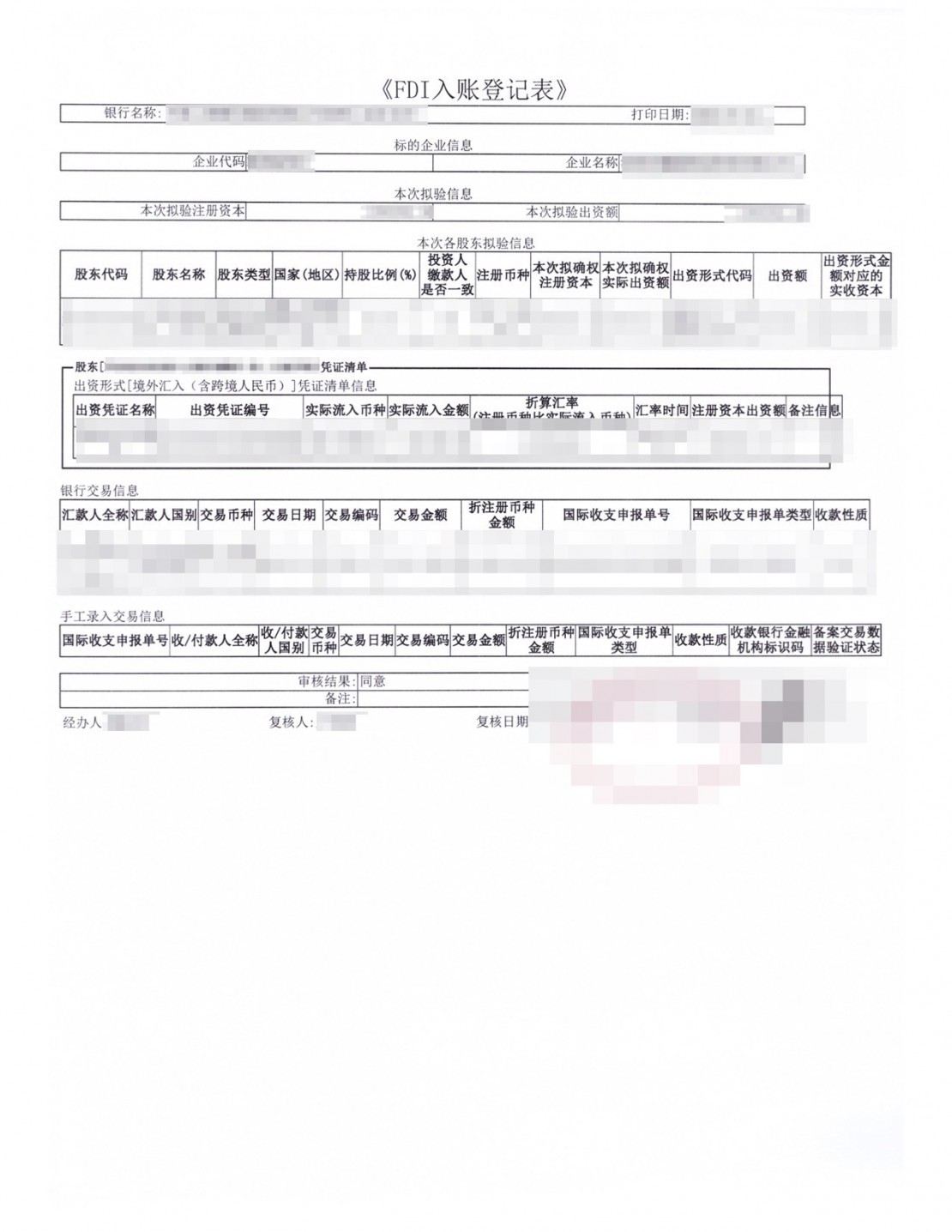
In a previous article, I described the way to credit investments to a current account as capital reserves. But this is far from the only way.
Finally, one can not go by without mentioning export and import accounts.
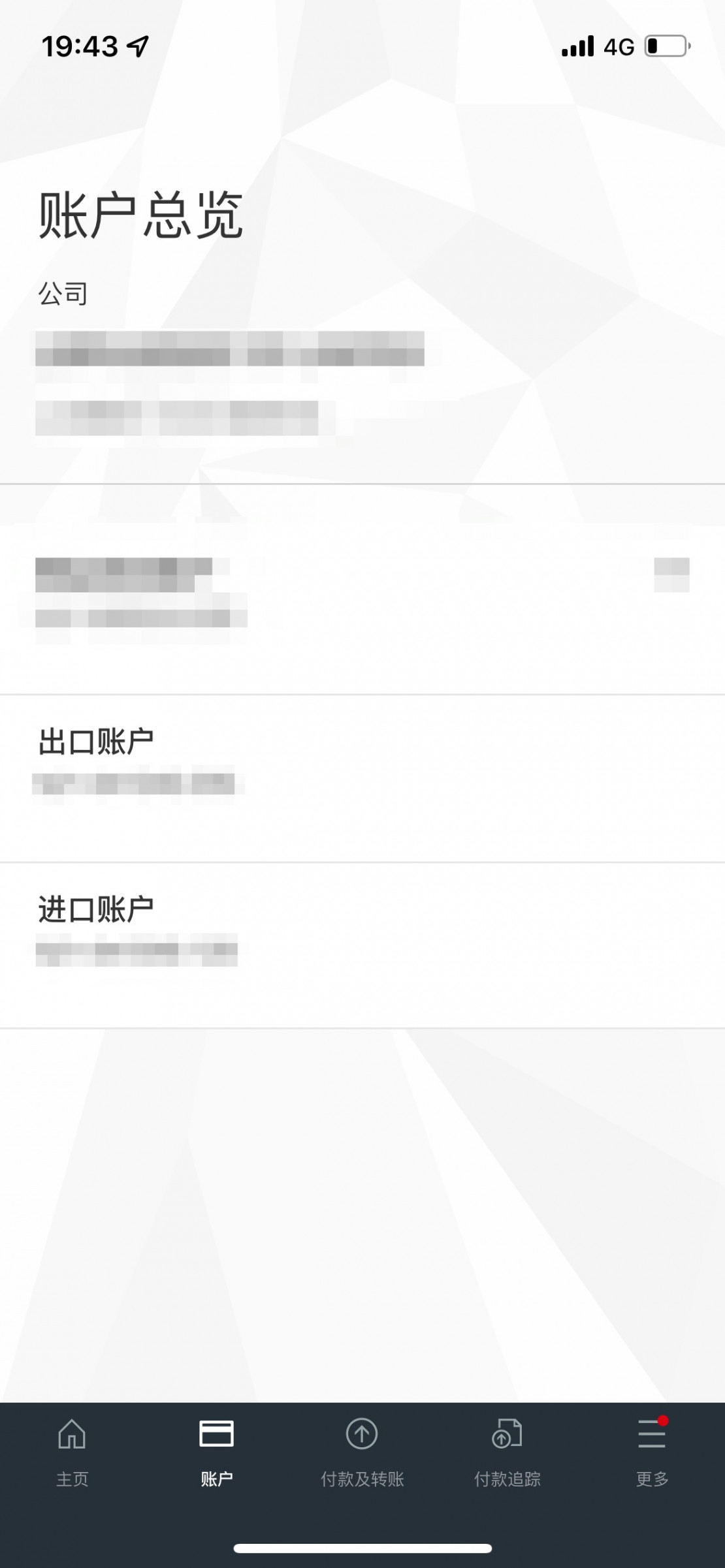
They are required for international commercial transactions under letters of credit (信用证). Letter of credit is a topic for a separate large article, but in short it is something like an international escrow service. To put a long story short, the buyer pays the bank a certain amount, for which the bank issues a letter of credit to them. The letter of credit is transferred to the seller. After the fulfillment of delivery obligations, the seller applies to the bank, providing documents on the fulfillment of obligations, and the bank transfers money to the seller under the letter of credit.
Lastly, one cannot fail to mention an extremely important issue. Despite the fact that all of the above applies equally to any bank in China, there are still a lot of differences. Starting from the scrupulousness of bank checks and ending with different attitudes towards passport holders of particular countries and jurisdictions. My personal opinion is – if there is a choice, then, both for individuals and legal entities, ICBC (Industrial and Commercial Bank of China) is the best.