Reporting expenses or 报销
In all cases when the company needs to transfer money to the employee for something (besides the salary), s/he must report on spending. In this article, we will go over the entire process in detail.
In total, there are two options:
- The company in advance transfers money to the employee, who spends it and then reports back
- The employee spends their own money, which the company reimburses later
In fact, both options are identical in terms of filing documents and reporting. The only thing to remember is that in the first case the submitted checks, invoices or any other supporting documents and the amount in them must coincide with the amount allocated to the employee up to a penny. Otherwise, the surplus will be deemed to be employee income and subject to personal income tax.
Secondly, only a certain range of expenses can be reimbursed without being taxed as the employee’s income:
- Transport costs
- Postage charges
- Office supplies and collective consumption goods for office
- Food
- Accommodation
- In some ways – compensation for rental housing. In this case, there is a preferential tax policy, according to which, until 2021, rental reimbursement by a company to an employee is not considered the latter’s income
That is, you will not be able to, say, buy a home theatre and frame it as company expenses – this “reimbursement” will be treated as income and you will have to pay personal income tax.
So, let’s consider the first option – the company allocated money to the employee in advance. In our example, this is 20,000 yuan for renting an apartment.

The employee must provide supporting documents showing that they spent this exact amount. In my case, it was three 发票 (invoices) from 自如 (Ziroom) – a real estate rental application for the amount of 4998*2+4798 = 14794 yuan.
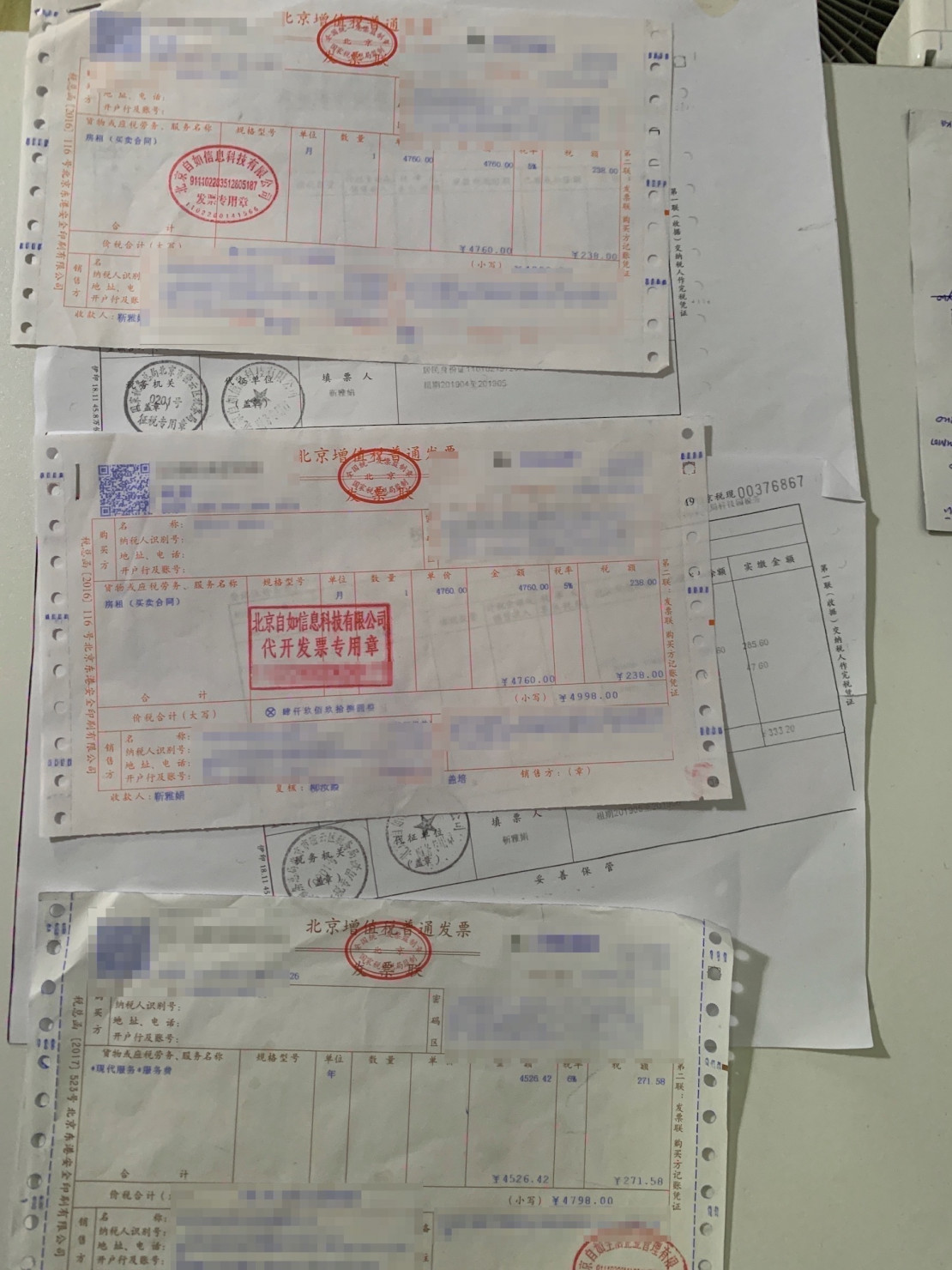
Three invoices – two at 4998 for rent and one at 4798 for service (service fee). The stapled notice is from the tax office confirming the payment of tax on rental income – Ziroom, as an honest and decent service, pays it for you.
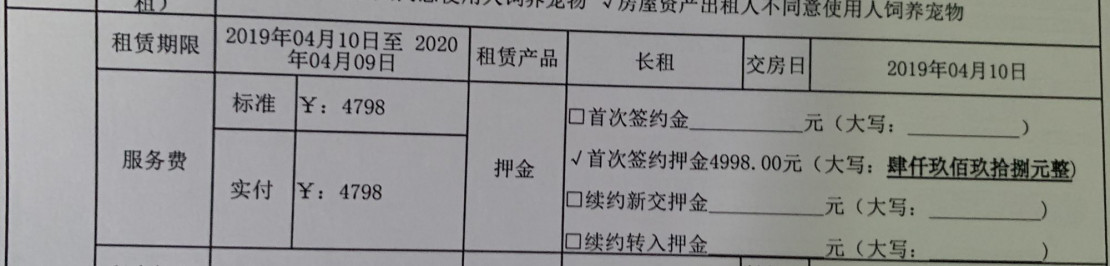
Also, a contract is quite suitable as an accounting document. In my case, it was a contract stating that 4998 yuan was taken as deposit.
That’s it, now you need to write an expenses report – 报销单. It is written in free format, templates are easy to find on the Internet.
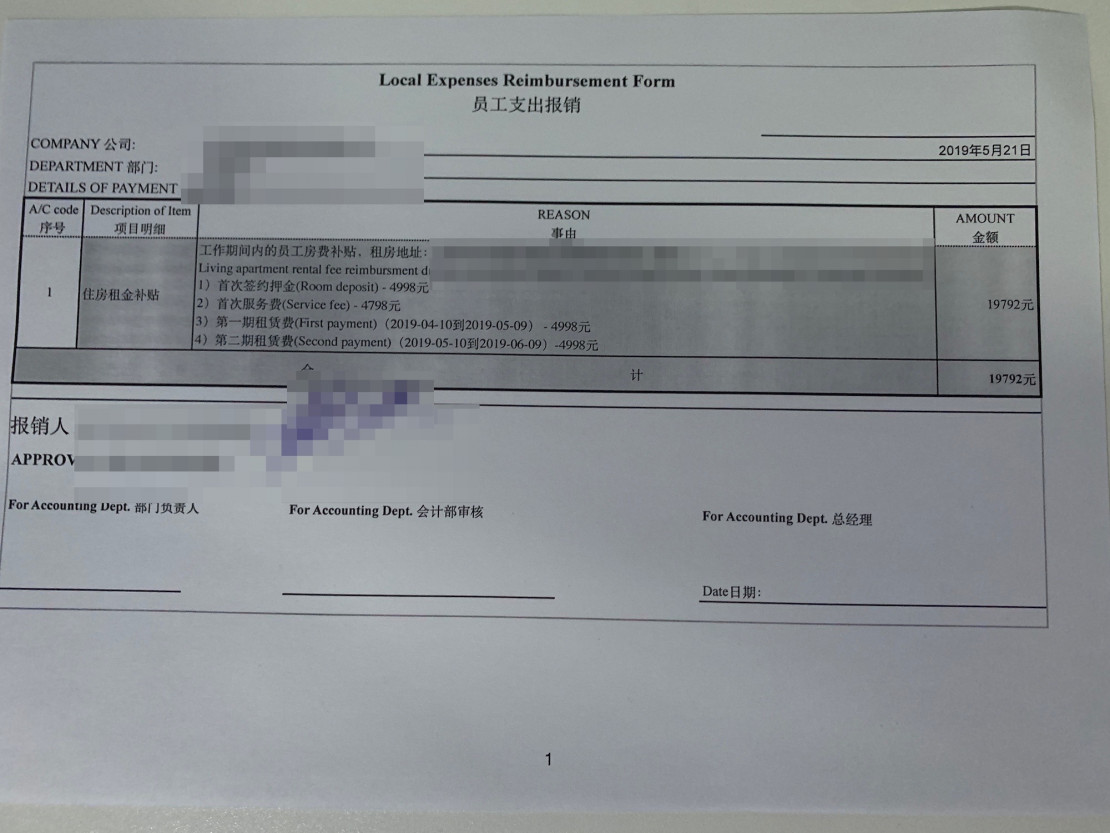
In the future, depending on the rules in your company, you either send it for approval with accountants and bosses, or (as in my case), simply send it with the originals of supporting documents confirming expenses to accountants for 记账. There you have it, it’s done.
Since 20,000 yuan was allocated and 19,792 spent, there are three ways to bring the balance to zero:
- Accrue the remaining money as a bonus is the easiest option. But keep in mind that this will affect personal income tax – you will have to pay tax on the additional amount
- Leave them in the account of the employee and spend on something else – but it is better not to put it off, it is advisable to spend everything to zero before submitting the quarterly report
- Return the money to the company – however, then you will need to warn the accountants in advance that this is a return of the allocated money, and not the company’s income.
Naturally, in the case when expenses are reimbursed post factum, everything is easier – the company simply transfers the exact amount to the employee and the balance is zeroed out. With regard to other expenses – such as transport, hotels – do not forget at the time of payment to require a check (小票), an invoice (发票), a receipt (收据) and so on, to the employee’s full name. Cash receipts without a stamp might not be accepted – depends on specific accountants. Until recently, railway tickets were a supporting document – now they are electronic almost everywhere. In general, in your specific case – check with the accountant what supporting documents they will accept and ask for them when making payments.
Surely, the easier way is to register a corporate Alipay, create employee accounts there, and pay everywhere with it. But this is a topic for a separate article.