Transferring insurance savings to another province
The first step, of course, is to figure out what these insurance savings are, where they come from and what exactly we are transferring.
The social insurance system in the PRC includes contributions to the Social Security Fund (社保局) and to the housing savings fund, and is abbreviated as 五险一金. As discussed in the article about salary, insurance contributions include contributions to:
- pension insurance fund (养老金)
- health insurance fund (医疗金)
- job loss insurance fund (失业金)
- industrial injuries insurance fund (工伤金)
- maternity fund (生育金)
As well as contributions to the housing savings fund (住房公积金)
Whereas insurance contributions are paid by all, without exception, foreigners working in China on a mandatory basis (I have heard about the voluntary nature of contributions only in Shanghai, and even that – as an exception), as regards the housing savings fund, everything differs from province to province and is often completely voluntary.
We will not specifically analyze everything here. When transferring insurance savings from one administrative-territorial unit to another, it is worth bearing in mind two important factors:
- only pension and health savings can be transferred. You cannot transfer the other three (as well as use them). Although you need to pay them. Indeed, this is an injustice. However, the first two account for 95% of insurance contributions, so it’s not a big deal
- only the part paid by the employee can be transferred. The part that is indicated in the table as “the share of the enterprise” and which, naturally, is paid by the enterprise, remains in the SSF of the province to be left.
On average, one monthly salary is accumulated on the pension and medical account (if the employee works on standard conditions) per year.
So where do you start? First, make sure you really need it. If you change jobs within the boundaries of, say, Beijing, then you do not need this, you simply quit one job and give your insurance account number to the new employer. If, for example, as in my case, there is a move from Beijing to Shenzhen, this is necessary.
Well, secondly, messing with the transfer is necessary only if you need continuity of work experience in China. If it is not important, then it is easier to take the money in cash at the old place, close the social insurance account and apply from scratch in the new place.
So, if you are nevertheless determined to transfer savings while maintaining the continuity of your work experience, then this is an instruction for you.
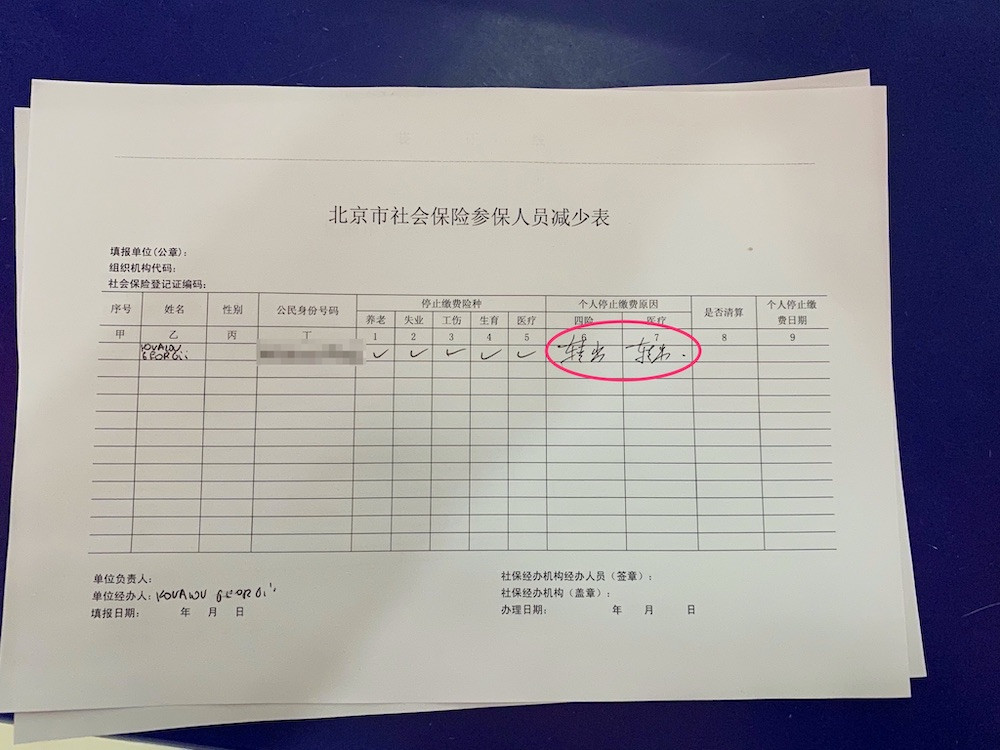
When you yourself (or the HR of the company) remove an employee from the SSF system upon dismissal, in the application for termination of payment of contributions, the reason should be “transfer” (转出), as opposed to the case when the savings are planned to be collected in cash.
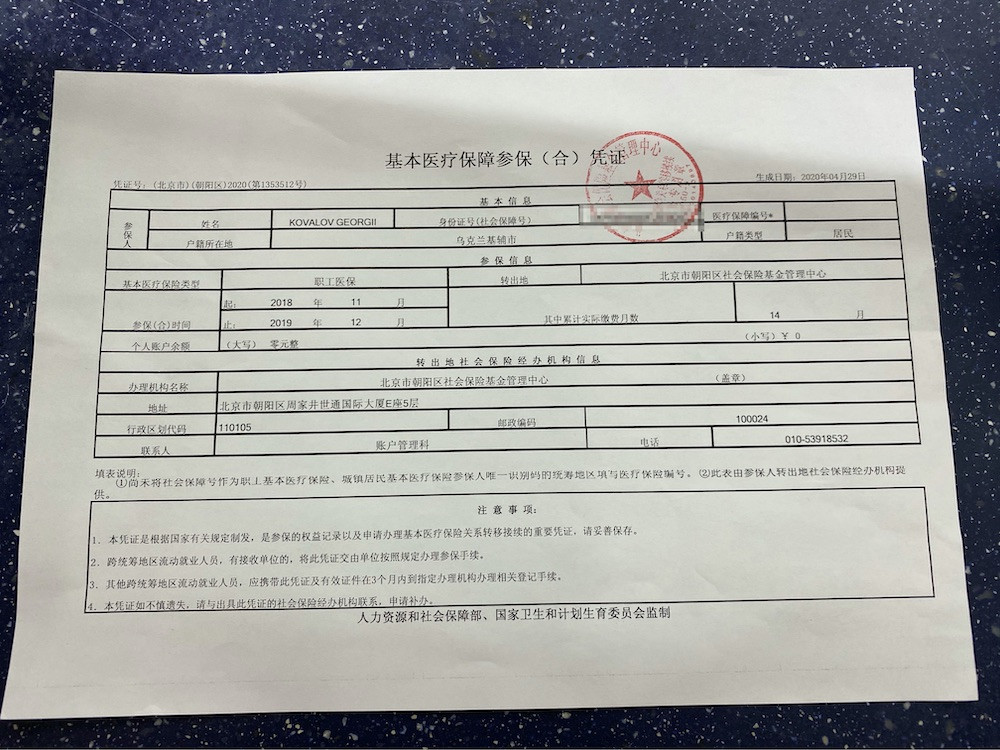
After that, you should be given a certificate on the status of your medical insurance account.
And pension insurance account
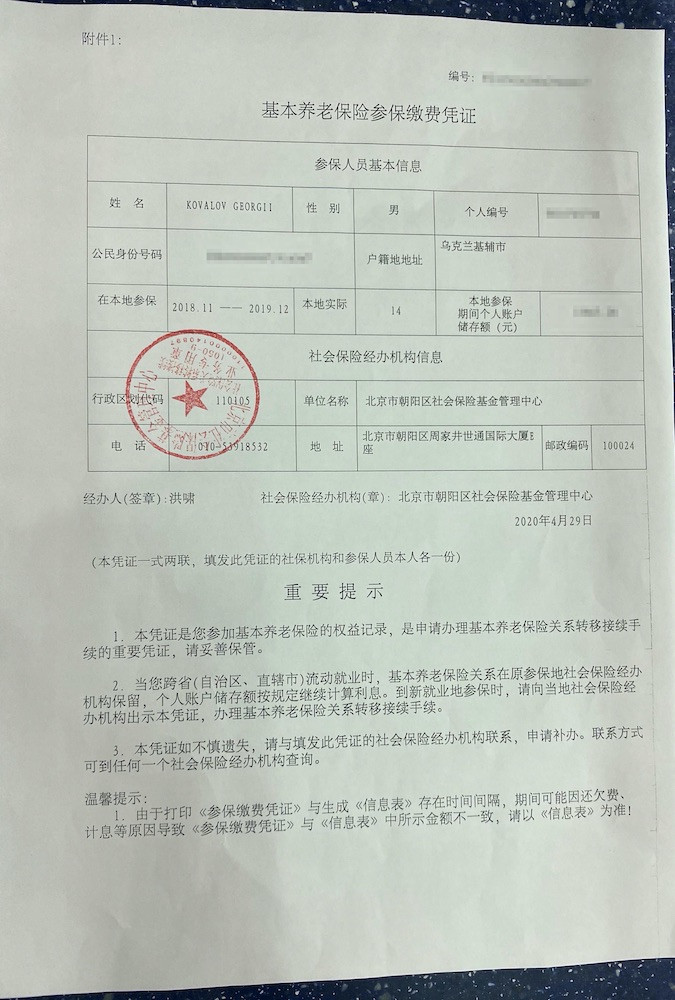
After that, you can placidly head for a new place and reopen insurance accounts there. There is nothing difficult in this, and usually the HR of the new employer will handle it.
Small nuances are related to which generation cards are used at the old and at the new place of work. In Beijing, for example, in 2018, first-generation cards were still issued to foreigners. While in Shenzhen – the second.
Here are the cards of both generations
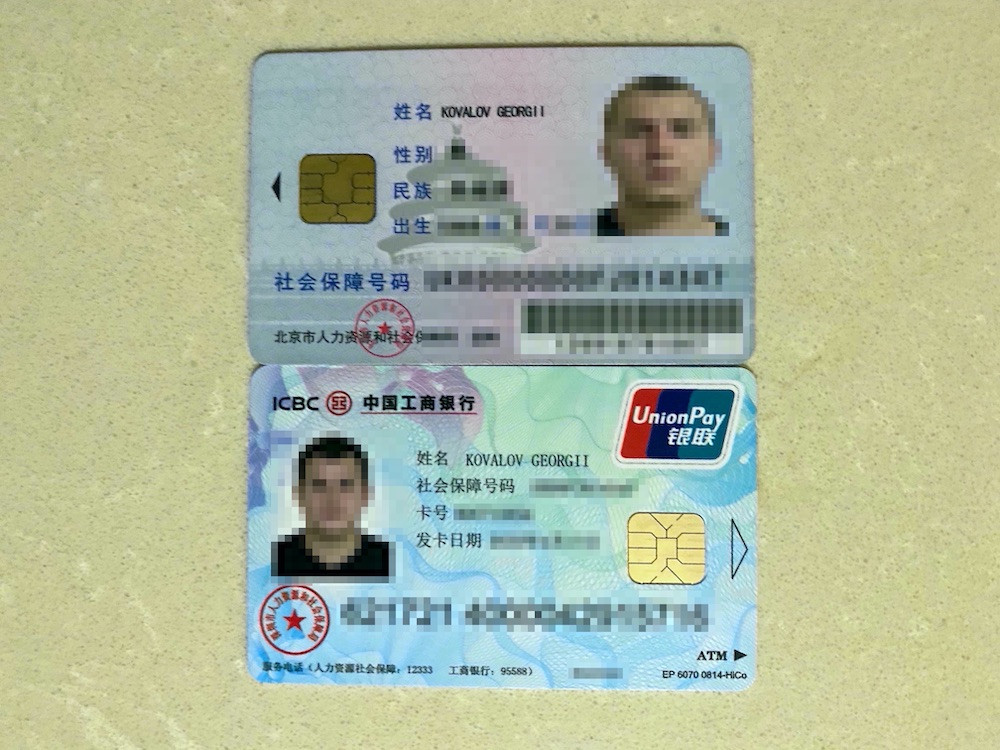
The difference is that the first generation cards can only be used as social insurance cards, which require a special reader.
The second generation card is two in one. This is also a bank card, which is a full-fledged UnionPay debit card and is shown in online banking. You can use it to receive and send money, link it to Wechat/Alipay – in short, just like a regular bank card. The Chinese have even wider functionality – there they can register a preferential travel pass (for schoolchildren, pensioners), receive a pension, and so on.
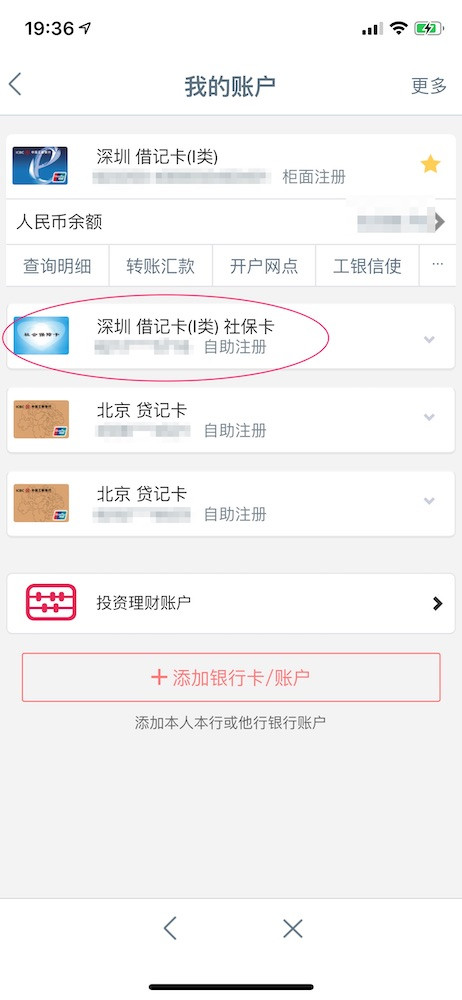
Social security card in ICBC mobile banking
At the same time, you can also use it as a social insurance card by giving it at the reception desk in a hospital or by paying for medicines at a pharmacy.
Accordingly, my nuance was that due to the fact that in Beijing I was given a first generation card, the balance of the medical account was not on the card, as it should, but on the health savings book (医疗存折) and I haven’t manage to transfer it – as you can see in the picture from the previous paragraph, my medical balance is 0. Now it can only be collected in cash in Beijing.
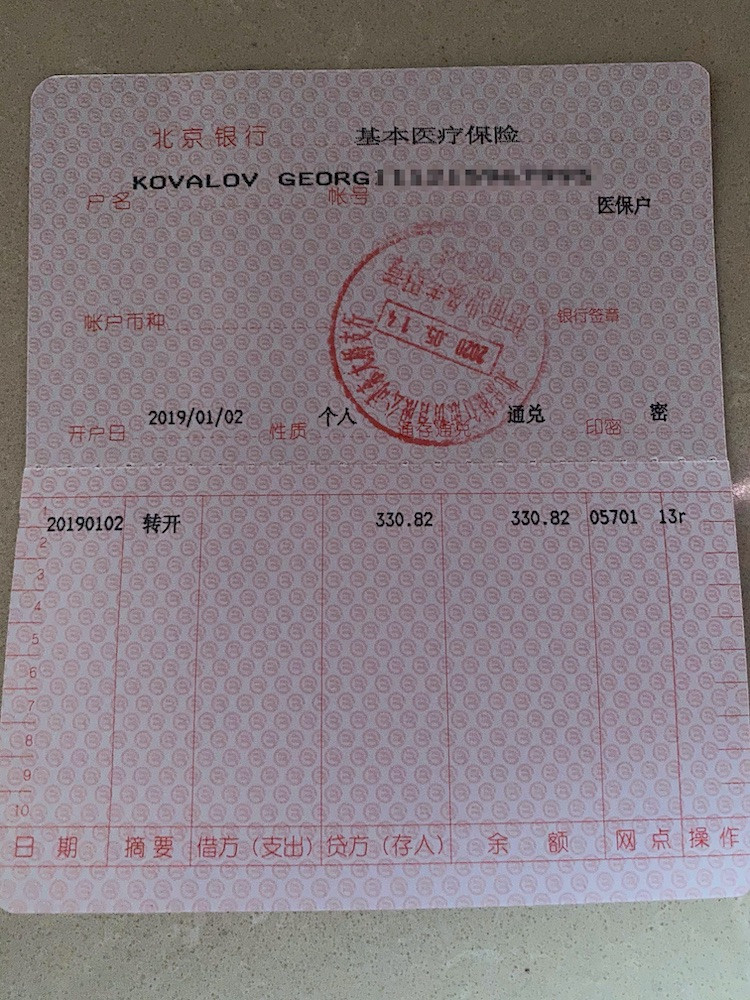
Health insurance account book issued by the Bank of Beijing
Well, one more nuance is that a second generation card is a full-fledged debit bank card and in order to open it, a foreigner needs, in fact, to open a bank account. And in many banks foreigners have problems doing this, as you know. It is not to say that these problems are unsolvable, but they can give you a headache. Therefore, I recommend (and have always recommended) to those in China to contact the most foreigner-friendly bank – ICBC
After you have opened a social insurance account at the new place of work and received a social insurance card, you just need to go to any SSF branch in the new city and write an application for the transfer of insurance savings, to which you attach a copy of your passport, work permit, residence permit and original certificates on the state of medical and pension accounts.
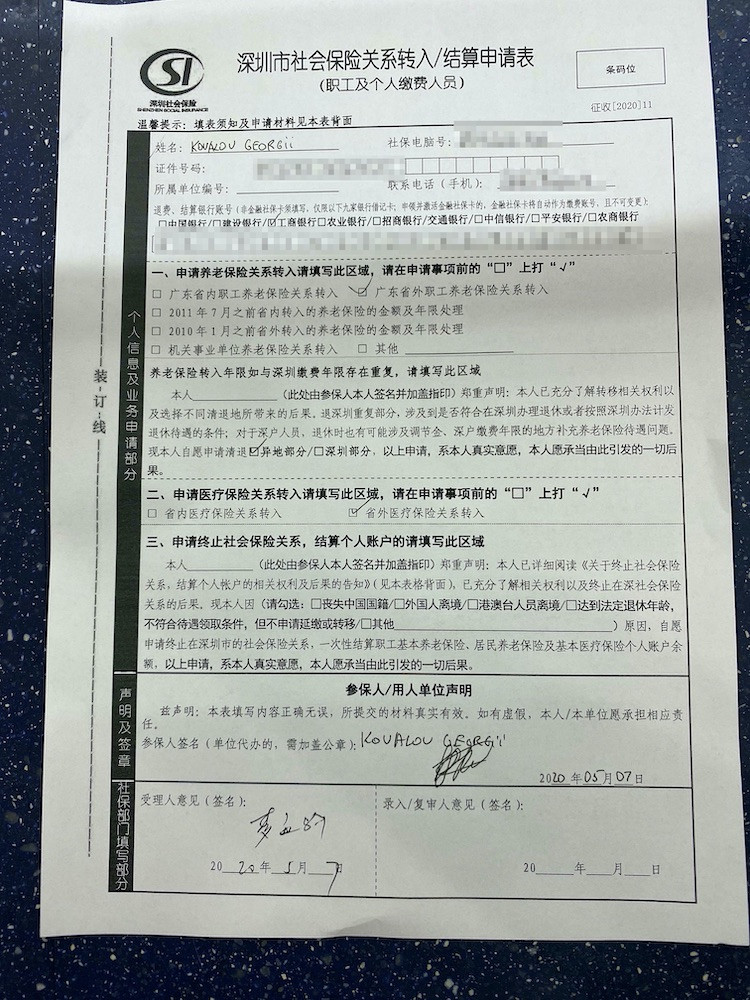
Application for the transfer of insurance savings from another province
Then you need to wait (in my case it took about two months). That’s it, you have successfully completed the transfer.
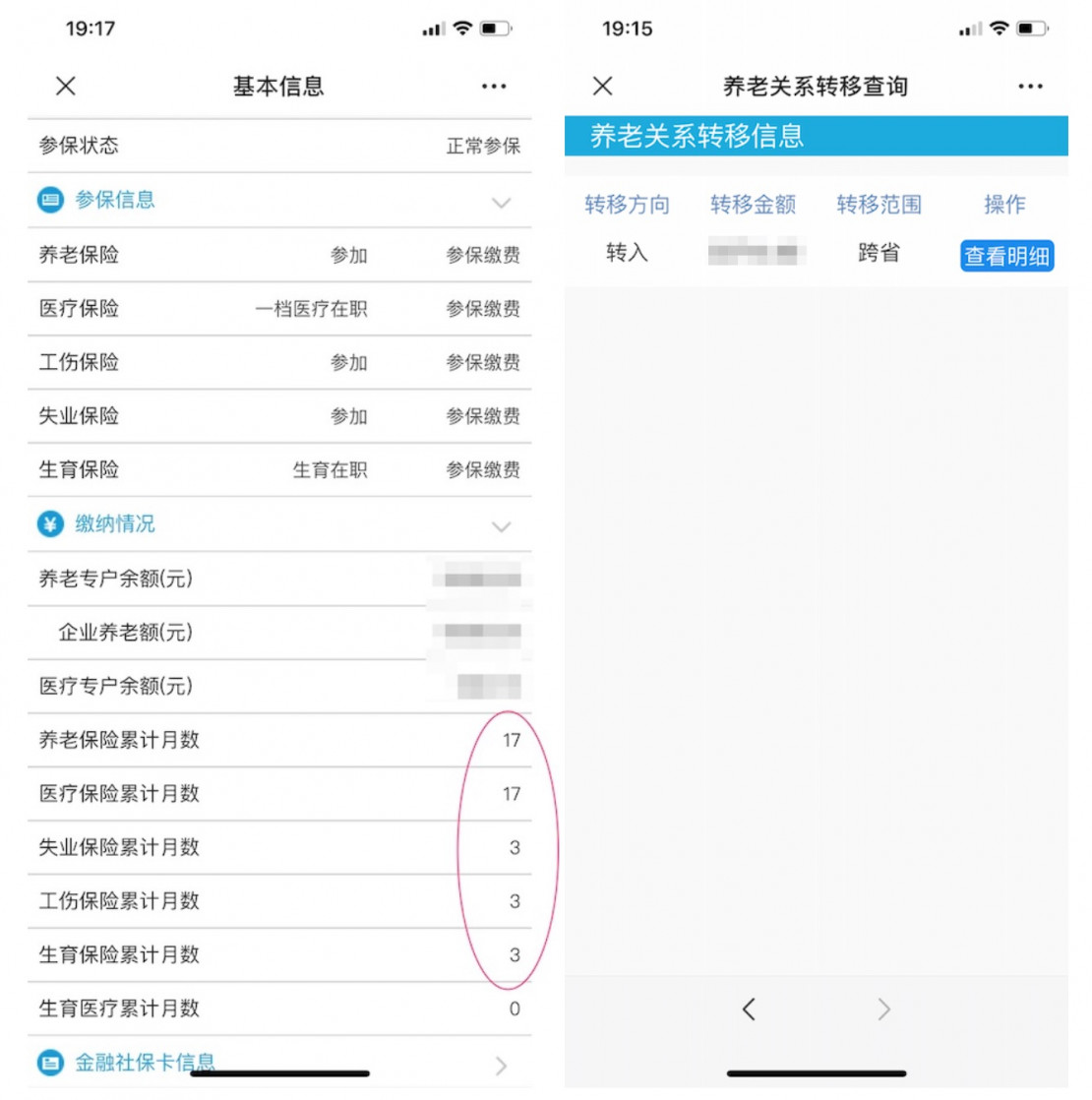
As you can see, the reason I got into all this mess – the number of total months of payment of contributions (needed to calculate the total length of service – to get a green card, apply for a pension, etc.) is now equal to 14 (the number of months in the previous job) +3 (in the new one) = 17 (for the other three types of contributions, it is clear that they are paid for only three months – my term at the new job).