ICP and other internet licenses in China
It is common knowledge that websites operations as well as any activity on the Internet on the whole is subject to government regulation in the PRC. This means that without the approval of the relevant authorities (at the moment – the Propaganda Department of the CPC Central Committee, the Ministry of Industry and Information Technology, the National Radio and Television administration, etc. – for each type of operations respectively) it is forbidden to conduct activities on the Internet. Corresponding permits will be discussed in this article.
These are required for many things. Firstly, without such permits it is impossible to purchase hosting on the territory of the PRC. As a result, Chinese users either will not get through to your website at all due to the firewall, or they will have to wait a very long time for the website to load. Websites with a license would rank much higher in search results than websites without them. It is almost impossible for a website without a license to connect various functions such as payment providers or Oauth via social networks. So on and so forth.
First of all, I would like to point out that the commonly accepted acronym ICP is erroneous. So let's get to grips with the terms first.
备案 – paperwork in Chinese, in a narrower sense – consideration and approval. Each website, regardless of the type of activity (if it is going to be hosted on a hosting inside the PRC) must go through this consideration.
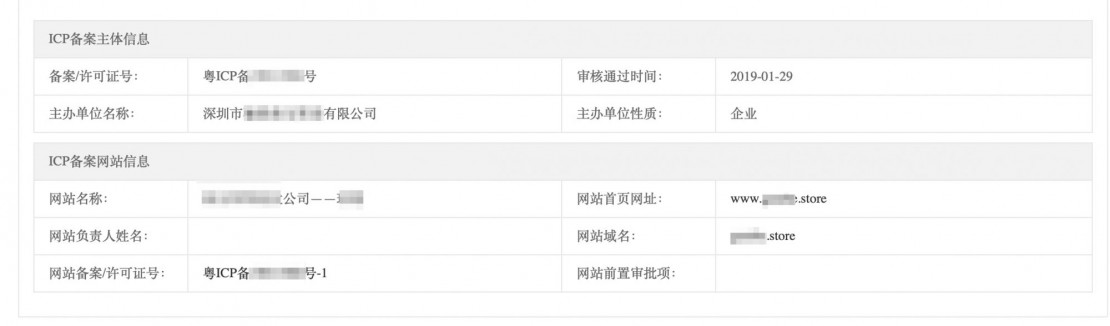
This is how the result looks like when the website has passed the consideration. Although the number contains the acronym ICP, it is not an ICP license.
增值电信业务许可证 – permit for telecommunication activities with added value. This is the permission that should be definitely obtained for earning a direct income using the website. It is this that is commonly referred to as ICP.
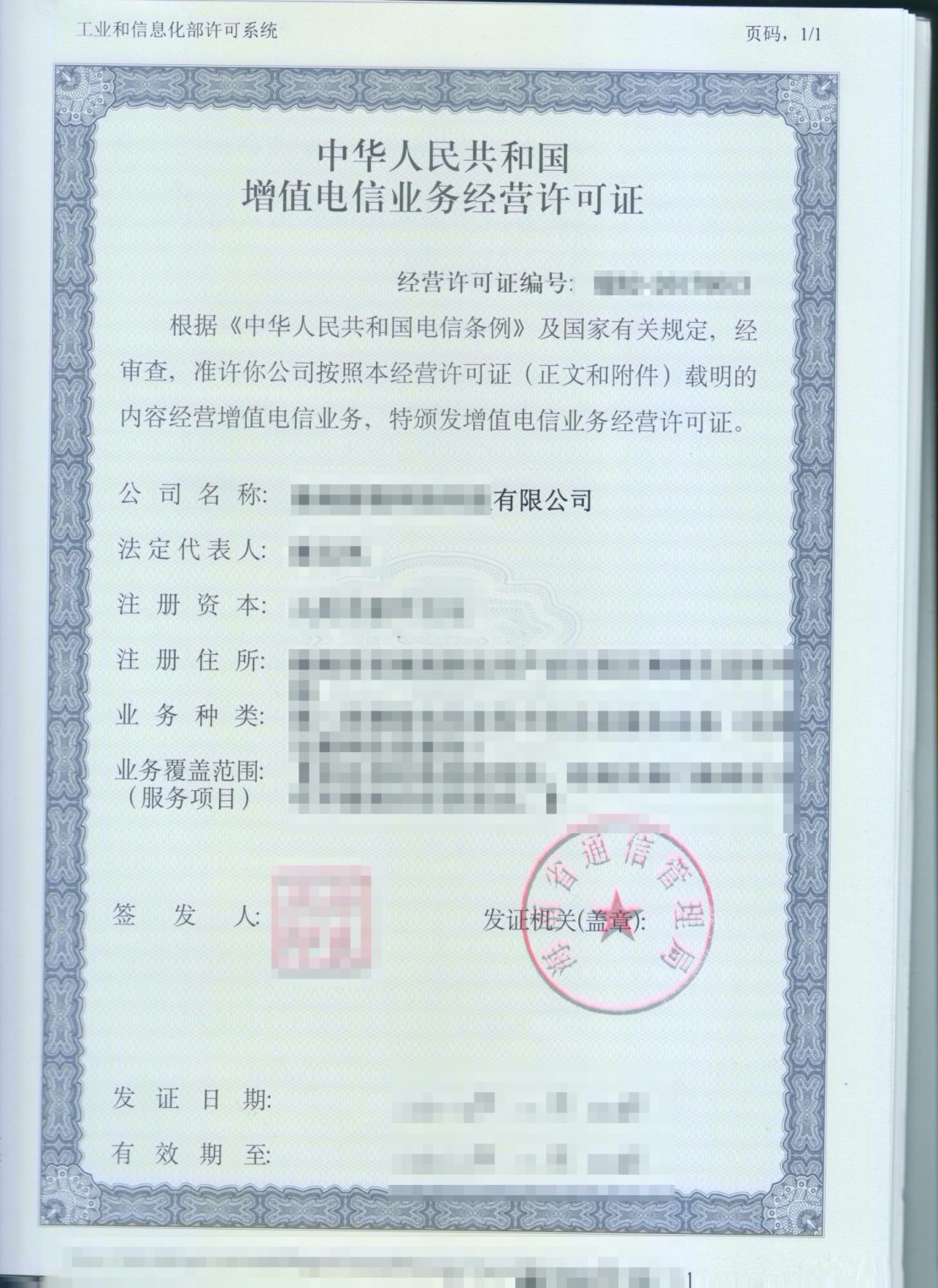
The license itself is 11 sheets, this is the first one. This license already indicates the scope of activity, registration address of the enterprise and the rest.
The difference is extremely simple – if you have a company and you need a website to create a business card for the company, describe products, create an online store of real items (i.e. existing in the real world, not virtual goods) – you only need to go through the consideration. If you are going to make money from virtual goods – games, news subscriptions, streams and podcasts – in general, on anything that does not exist in the real world – you need a permit for telecommunication activities. And, of course, the necessary industry permits, for example:
1) 网络广告经营许可证 — advertising activities on the Internet
2) 网络文化经营许可证 — cultural activities on the Internet
3) 互联网出版许可证 — publishing on the Internet
4) 信息网络传播视听节目许可证 — broadcasting audio-video materials on the Internet
5) 互联网新闻信息服务许可证 — news and information services on the Internet
6) 互联网药品信息服务资格证书 — not quite a permit, rather a certificate of compliance with regulations for the publication of information about medicinal products on the Internet
7) 电信与信息服务业务经营许可证 — information and telecommunication activities
Once again, in a nutshell. If the website is a tool for earning money offline, then you simply indicate that the domain, hosting belongs to such and such a company and go on using it. If the website is a tool for making money online, then you already need licenses.
The following requirements are imposed on websites and Internet services that wish to operate on the territory of the PRC. Let's consider them on the example of Alibaba Corporation, which provides complex “turnkey” services – from buying hosting to contextual advertising and SEO-promotion.
In general, I recommend that everyone who wants to get involved in all this initially contact one of the large companies providing complex services. Almost everyone is like that – Alibaba, Tencent, Sohu, NetEase, Xinnet and dozens of others. The pros are that you won’t need to bother collecting documents from one service and sending them to another, visiting government agencies on your own, etc. If you put all things on one platform, everything will be done through one admin account. And most often it is free of charge – for example, to consider a website, Alibaba only requires that the hosting is provided by them and the domain is purchased from their own registrar. There are no extra fees.
Accordingly, there are few requirements for consideration. The legal entity must be legally registered in the PRC, the domain and hosting must be purchased from a Chinese company. There are no other restrictions. It should be noted right away that a private person can also go through the consideration – regardless of whether s/he is a citizen of the PRC or not, but s/he cannot conduct commercial activities.
Obtaining a license for commercial activities involves too many nuances, so we will consider them only briefly.
- It goes without saying that the scope of operations of the website and the business scope specified in your business license (营业执照) must match. If you sell toys through your online store, your business license must state “non-food products retail”. Naturally, then there may be inspections from the tax authorities with regard to paying taxes and the legality of the trading process itself, from the Ministry of Health on the subject of the compliance of toys with health standards, but this does not concern the Internet. There are no other restrictions. The requirements about territorial division, about the registered capital for activities throughout the country / within one province, etc. have long been removed. That is to say, no one will ask questions like “why the legal entity is registered in Beijing, and the goods are shipped from Shenzhen”.
- If you are applying for a business license, then everything is much more complicated. There are many restrictions related to the registered capital. For example, the basic requirement is that the registered capital must be over 1 million yuan. If you are going to publish games, the registered capital must be at least 51/49 Sino-foreign (with very rare exceptions). Many activities require additional licensing (see examples in the list above). Certain activities require a deposit at the Market Administration. So on and so forth. In any case, these matters go far beyond the topic of the article.
To begin with, let's consider a simpler case – you need a website with which you will earn money offline. So, the account on Aliyun is created, you will need to go through a simple verification, which consists in sending an amount of 5 yuan from your corporate account to the account provided by them. Naturally, the company name specified during registration and the name of the account holder must match. After verification, you purchase a domain and hosting and go to the 代理备案系统 – intermediary system for website consideration.
After that, fill out a simple form – the name of the website and its language, select the purchased domain and hosting from the list and create an application. After that (on the example of Aliyun), you will need to go through verification as a company manager – for this you will need to take a photo against the background of a blue poster sent by Aliyun.
In principle, that’s it. It a couple of days, the application will be approved and you will receive a website consideration number (备案编号). Its validity can be checked on the website of the Ministry of Industry and Information Technology.
That's it, actually.
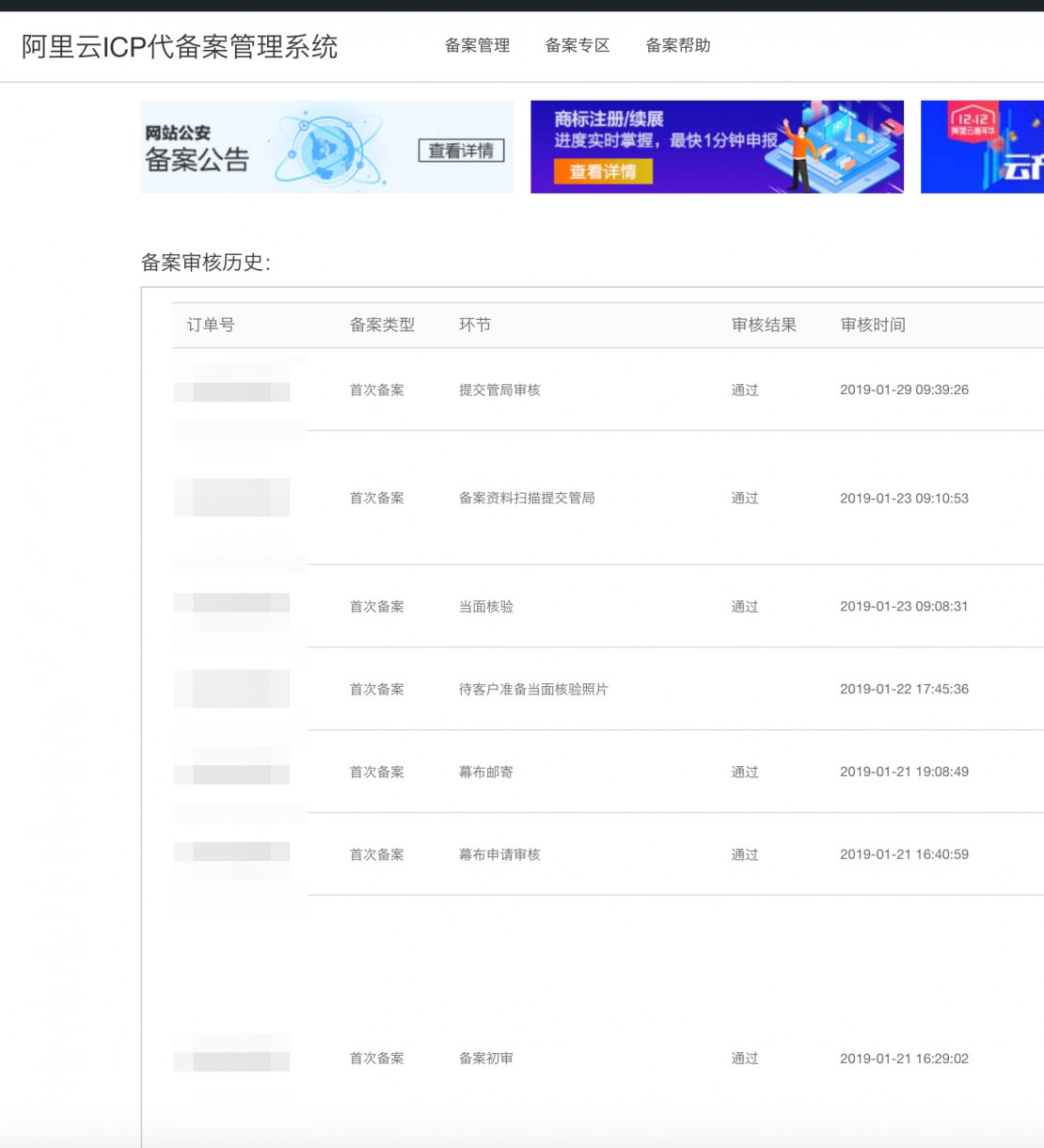
As you can see, it took only a week from the beginning of the filing to the approval by the relevant authority. It could have been faster
Things won't be so easy however if you need a commercial license. Unlike consideration, a commercial license is issued after three months, and the list of materials is much longer. How to do it – we will discuss in future articles.